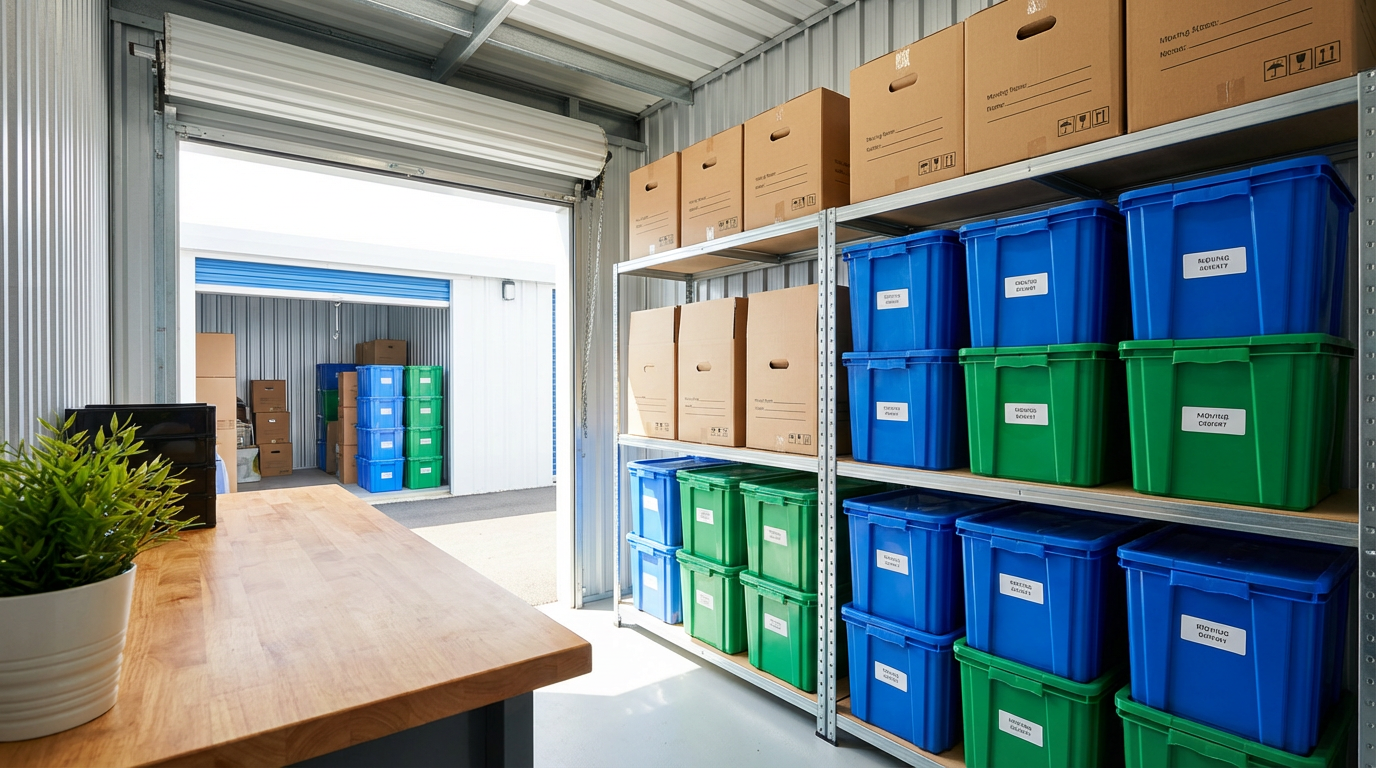
Welcome to the world of self-storage! Whether you're decluttering your home, in the middle of a move, or finding a place for business inventory, a storage unit can be a lifesaver. But to make the most of your space, a little planning goes a long way. At modSTORAGE, we want your experience to be seamless and efficient. That's why we've compiled these essential self storage tips to help you pack, organize, and store your belongings like a pro.
Choosing the Right Self-Storage Unit
The first step is selecting the perfect unit for your needs. Rushing this decision can lead to paying for space you don't need or, worse, running out of room. Here’s how to get it right.
1. Take Inventory of Your Items
Before you even look at unit sizes, make a comprehensive list of everything you plan to store. This will not only help you choose the right size but will also be invaluable later for insurance and organization. Group items by category (e.g., furniture, boxes of clothes, kitchen supplies) to get a clearer picture.
2. Select the Perfect Unit Size
Self-storage facilities offer a wide range of sizes. Use your inventory list to estimate the space you’ll need. A 5x5 unit is great for a few boxes and a small piece of furniture, while a 10x20 unit can hold the contents of a multi-bedroom house. Our team at modSTORAGE can always help you visualize the space and make the best choice.
3. Decide Between Climate-Controlled and Standard Units
One of the most important self storage tips is to consider your items' sensitivity. A standard unit is like a garage, exposed to temperature fluctuations. For items like wood furniture, electronics, artwork, important documents, and textiles, a climate-controlled unit is a must. These units maintain a stable temperature and humidity level, protecting your valuables from damage.
Expert Packing and Self-Storage Tips
How you pack can make all the difference. Proper packing protects your items during transit and makes the storing process much smoother.
4. Use High-Quality, Uniform Packing Supplies
It might be tempting to grab free boxes from a local store, but they are often flimsy and non-uniform. We recommend purchasing sturdy, same-sized moving boxes. They are easier to stack, more stable, and will better protect your belongings. Don’t forget essentials like packing tape, bubble wrap, and packing paper.
5. Label Every Box Clearly
Label each box on the top and at least two sides with its contents and the room it belongs to. For extra credit, number the boxes and keep a corresponding list on your phone or in a notebook. This saves you from having to open every box to find one specific item.
6. Disassemble Furniture
To save a significant amount of space, disassemble large items like bed frames, tables, and shelving units. Place all screws, bolts, and small hardware in a labeled Ziploc bag and tape it securely to the largest piece of the furniture it belongs to.
Maximizing Your Self-Storage Space: Pro Tips
Once you’re at the unit, a little strategy will help you maximize your space and ensure easy access to your items.
7. Create a Center Aisle
This is a game-changer. Leave a walkway from the door to the back of the unit. This allows you to access items in the back without having to unload everything in the front. It’s one of the simplest self storage tips that has the biggest impact.
8. Place Heavy Items on the Bottom
Store heavier items and boxes on the bottom of stacks to create a stable base. Place lighter, more fragile items on top. This prevents crushing and damage.
9. Utilize Vertical Space
Think vertically! Stack your sturdy, uniform boxes high to take advantage of the unit's full height. Use freestanding shelves to organize smaller items and keep things off the floor. Sofas can often be stored on their end (if they are sturdy) to save floor space.
What Not to Store: A Quick Guide to Self-Storage Tips
Reputable facilities like modSTORAGE have restrictions for the safety of all tenants. Never store the following items:
-
Perishable Goods: Food items can attract pests and rot.
-
Hazardous Materials: Flammable, corrosive, or explosive materials are strictly forbidden (e.g., gasoline, propane, paint, fertilizers).
-
Living Things: This includes plants and animals. A storage unit is not a suitable environment for any living thing.
-
Illegal or Stolen Items: Self-storage units cannot be used for illicit activities.
Long-Term Storage Success
Your job isn't over once the door is locked. A little maintenance goes a long way.
11. Keep a Detailed Inventory Map
Along with your inventory list, draw a simple map of your storage unit layout. Mark where major items and specific numbered boxes are located. This will make future visits quick and painless.
12. Visit Your Unit Periodically
If you're storing long-term, it’s a good idea to check on your unit every few months. You can check for any issues, ensure your belongings are still in good condition, and perhaps retrieve items you find you need.
By following these self storage tips, you can ensure your belongings stay safe, organized, and accessible. At modSTORAGE, we’re dedicated to providing a premium, secure, and user-friendly experience. Contact us today to find the perfect storage solution for your needs!